It is a constant
debate on the issue of Western culture or (in another term) American popular
culture imperializing their influences globally and especially towards Asia.
Although it is a fact to an extend that the current lifestyle that we are
living now are very much infused with Western influence, however, it does not
mean that we are culturally homogenized with Western culture in general. Following
this, we will be looking in to the Asia’s influence towards the East/Southest
Asia’s culture through the presence of Japanese TV dramas and to a certain
extend Korean TV dramas and how the fusion of these dramas comes into the
picture.
From
the late 80’s to the 90’s, Japan’s influence has been subtly entering into the
East/Southeast Asia’s culture. And one of the influences is the Japanese TV
dramas – from Tokyo Love Story, Long Vacation, Beach Boys to Love Generation
and Overtime. It is the type of dramas that we have been watching during the
younger days, feeling emotionally attached with the characters that were
depicted in the stories and at the same time trying to be as culturally
connected with them as possible. It was the popular trend then that young
adults are hyped about actors such as Kimura Takuya, Takeneuchi Yutaka, or are
keen to learn Japanese language, visiting the country in order to feel
connected with the dramas and even collecting posters, CDs, merchandises, etc.


It
is a wonder as to why we associate so intensively and quickly towards Japanese
TV dramas in contrast to us accepting the Western dramas. It may be due to
cultural proximity that resulted our acceptance so easily towards these dramas
in comparison with Western dramas. The storyline and the characters shown in
the dramas, the intensity of these young adults striving to find their love and
career at a big city that generally resulted many urbanites to relate to their
stories (Iwabuchi, 2004:13). Or perhaps it is as Ko indicated on how Japanese
TV dramas triggered a certain notion of “reality” and “imaginary” towards the
Tokyo/urban lifestyle for the young working adults in Asia (Iwabuchi,
2004:13-14). It is these sorts of depictions that resulted many young adult
audience to become so fondly attached towards the Japanese culture.
This
cultural integration followed through from the Japanese-pop culture to the
present hype of Korean-pop culture. By breaking down and viewing the Korean TV
dramas with the Japanese TV dramas, one can’t help but notice the similarities
in the trend. Both depicting the stories of urban young adults chasing after
love, career and their dreams, except that Korean dramas linked their family
relationships very strongly in comparison to the solo urban youth’s adventure that
was usually portrayed in Japanese TV dramas (Iwabuchi, 2004:17).


The Korean-pop
culture uses the same method of entering to the East/Southeast Asia market as the
Japanese-pop culture which is through the collaboration with local broadcasting
companies, in this case the Arirang TV via Asia Sat No 3 broadcasting satellite
(Suh, Cho and Kwon, n.d.:6). Though there are views of disassociating the
relations between both the Japanese-pop culture with Korean-pop culture, the
methods of influence are similar and so does the ‘popular wave’ that followed
through as well. Young adults are now going excited about actors such as Lee
Min Ho, Jang Geun Suk, where these actors were made famous due to the TV dramas
they were acting in. Perhaps the only difference is that Korean influence is
more vocal and distinct in comparison to Japanese’s subtle influence. The
indication of being more distinct in a way shows especially when these Korean
actors or celebrities, once just recently claimed a certain level of fame in
the Asia market was quickly recruited to become spokesperson for a selected number
of product (usually Korean products). This first promotes the selected products
in association with Korea’s brand and secondly, further promotes the Korean
celebrity even further. This method of branding is rarely seen for the Japanese
actors or celebrities during the peak of Japanese-pop culture in East/Southeast
Asia. And it may be one of the cultural influence methods that see Korean-pop
culture influence grew stronger and more widely associated in comparison to
Japan.


This brought us in
to the upcoming Asia’s fusion TV drama trend. The desire to provide a popular TV drama that
will be well-received by their local audiences, generated this new trend of
obtaining an initial storyline from an already well-received, popular Japanese
TV drama and converting it - using their own local actors and locations – their
own version of the exact TV drama. Few of the examples are Boys Over Flowers,
To The Beautiful You, It Started With a Kiss, etc. Perhaps, this may further
encourage the cultural proximity between the Asian audience and even a deeper
cultural localization in within the respective countries.


For
now, one thing is clear that Western influence may have generally infused in
the global context however, we are yet to be termed as culturally
homogenized. Instead, cultural
hybridization would be considered a better term – not only a hybrid between the
local culture with Western culture, but also inclusive with a mixture of Asia’s
cultural influence.
References
Iwabuchi, K. 2004, ‘Introduction: Cultural
Globalisation and Asian Media Connections’, Feeling
Asian Modernities: Transnational Consumption of Japanese TV Dramas, Aberdeen,
Hongkong: Hong Kong University Press, pp. 1-22.
Suh, C.S., Cho, Y.D. and Kwon, S.H. n.d., The Korean Wave in Southeast Asia: An
Analysis of Cultural Proximity and the globalization of the Korean Cultural
Products, 3rd Congress, Research paper, World Congress of Korean
Studies: South Korea, viewed 3 September 2013, <http://congress.aks.ac.kr/korean/files/2_1358476377.pdf>
Image Sources
Fig. 1, Tokyo
Love Story, n.d., Google Image, viewed 3 September 2013, <http://www.dramastyle.com/drama/Tokyo-Love-Story-Tokyo-Love-Story/#.UiYYG9JRB8E>
Fig. 2, Long
Vacation,n.d., Google Image, viewed 3 September 2013, <http://www.yesasia.com/us/long-vacation-japan-version/1001819891-0-0-0-en/info.html>
Fig. 3,
Love Generation, 2010, Google Image, viewed 3 September 2013, <http://malaysiangenius.blogspot.com/>
Fig. 4, Winter
Sonata, n.d., Google Image, viewed 3 September 2013, <http://www.tokodvd.com/detail/drama-korea-lain2-406.html>
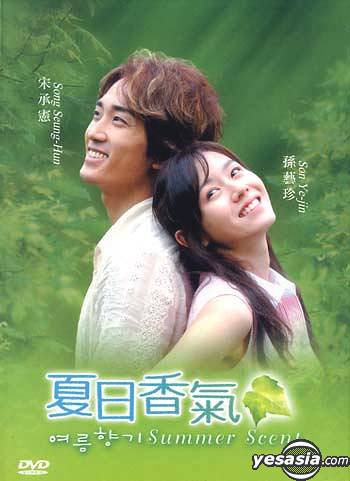
Fig. 5, Summer
Scent, n.d., Google Image, viewed 3 September 2013, <http://www.lovelydvd.com/SummerScent-247.html>
Fig. 6, Nature
Republic, 2011, Google Image, viewed 3 September 2013, <http://pinkyreg.wordpress.com/tag/nature-republic-grand-opening-sm-north-edsa-the-block/>
Fig. 7, Holika
Holika, 2011, Google Image, viewed 3 September 2013, <http://www.iwantibuyitalk.com/2011/07/holika-holika.html>
Fig. 8, Meteor
Garden, 2009, Google Image, viewed 3 September 2013, <http://mytika07.blogspot.com/2009/05/wallpaper.html>
Fig. 9, Boys
over Flowers, 2013, Google Image, viewed 3 September 2013, <http://en.wikipedia.org/wiki/Boys_Over_Flowers_(TV_series)>
Fig. 10, Hana Yori Dango, 2013, Google Image, viewed 3 September 2013, <http://tokyosuite.wordpress.com/2013/06/02/review-hana-yori-dango-season-1/>




No comments:
Post a Comment